


This piece is part of “Workers Rising,” a series celebrating and analyzing labor struggles past and present — from shop floors to app-based gigs, exploring how workers build power against increasingly creative forms of exploitation.
I. The Teacher Working Retail
Here’s what individual precarity looks like: I have 14 years of teaching experience, nearly a Master’s degree, and I work nights at Lowe’s to make ends meet. Not because I’m bad with money or made poor choices, but because teacher salaries in America are designed to keep us desperate enough to accept any conditions while being too exhausted to organize for better ones.
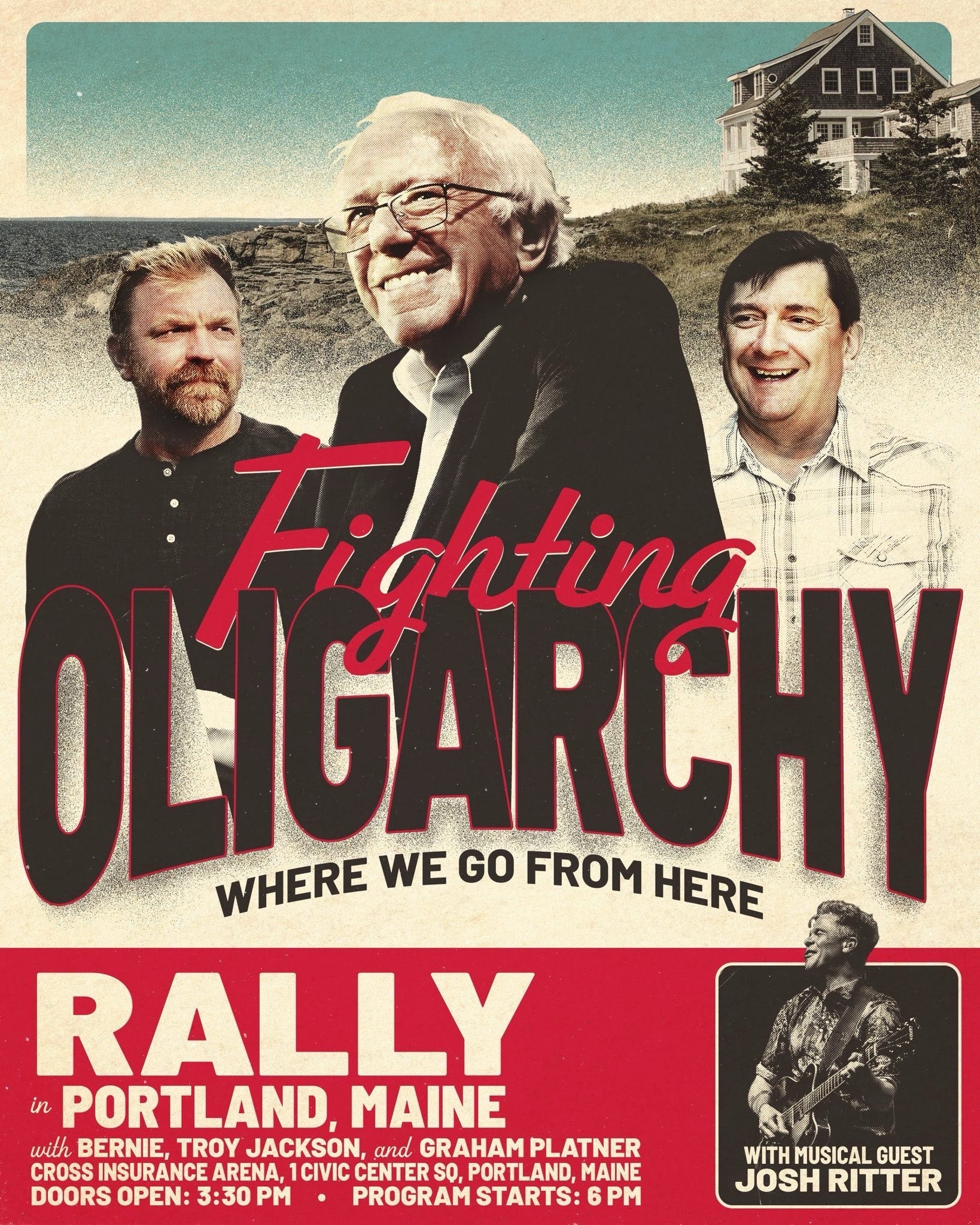
Last Labor Day, my mom and I drove to Portland’s Cross Insurance Arena to join over 6,000 people for Bernie Sanders’ “Fighting Oligarchy Tour.” Walking into that space, I brought the question that haunts every underpaid worker: “Am I the only one struggling like this?”
But something remarkable happened in that arena. When Bernie stated bluntly, “We live in an oligarchy,” the entire crowd erupted in a standing ovation that seemed to shake the building. When the applause finally died down, he quipped, “That was going to be my next question—if you know what oligarchy means—but based on that response, clearly you all do!”
It wasn’t just applause. It was collective recognition. Six thousand people acknowledging that our individual struggles aren’t personal failures—they’re systemic features. That moment crystallized something I’d been trying to articulate: what solidarity actually feels like, and why it’s the antidote to the anxiety economy I wrote about last week.
II. From Individual Struggle to Systemic Recognition
The power of that rally wasn’t in any single speech—it was in the progression that transformed individual frustration into collective understanding. Each speaker built on the last, moving the crowd through stages of awakening that felt both inevitable and electric.
What happens when working people stop believing their struggles are personal failures? When the teacher working retail realizes she’s not alone, when the shipbuilder understands his declining wages aren’t about his worth but about policy choices, when thousands of people simultaneously recognize that the system isn’t broken—it’s working exactly as designed?
The rally demonstrated this transformation in real time. Individual suffering under capitalism isn’t random—it’s manufactured. The teacher working retail, the graduate student on food stamps, the gig worker without benefits—these aren’t isolated tragedies but expressions of the same structural logic.
Capital requires what economists call the “reserve army of labor”—a pool of desperate workers who’ll accept any conditions. But that desperation only works if workers believe they’re alone in it. The moment we recognize our struggles as shared conditions rather than personal failures, everything changes.
III. The Architecture of Movement Building
What I witnessed that night was a masterclass in how movements actually build—not through inspirational speeches alone, but through a carefully constructed progression that transforms individual despair into collective power.
Stage One: Righteous Anger - Bryan Bryant, International President of the International Association of Machinists (IAM) and a former shipbuilder at Bath Iron Works, opened the rally with the authentic fury of someone who’d lived the struggle he was now fighting. He didn’t ask us to be polite about exploitation. He yelled with the righteous anger that comes from watching your labor create wealth for others while you struggle to get by. This wasn’t therapeutic venting—it was organized anger, channeled through decades of union battles and focused on specific targets. Bryant brought the credibility of calloused hands and the authority of someone who’d built ships and built unions.
Stage Two: Systemic Analysis - Graham Platner, an oysterman from Sullivan running against Susan Collins for Senate, provided what every effective movement needs: a framework that explains why individual solutions fail. “We do not live in a system that is broken,” he declared to the crowd of over 6,500. “We live in a system that is functioning exactly as it is intended. We live in a system that has been built by the political class to enrich and support billionaires on the backs of working people.”
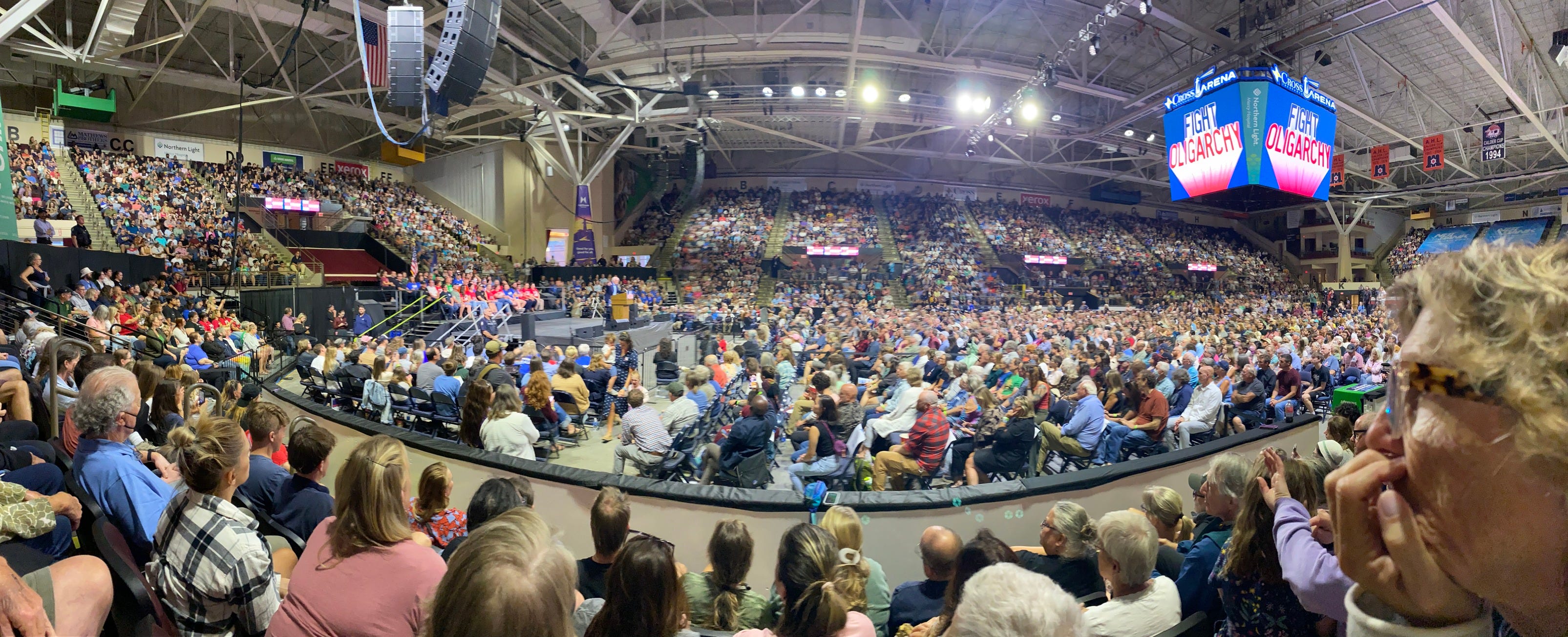
When Platner noted that in 1990 there were fewer than 100 billionaires in America, while today there are over 800, he asked the crowd directly: “When you look around, do you see a community and a state that is eight times wealthier than it was in 1990?” The question hung in the air like a challenge—not to politicians, but to the audience’s own understanding of how wealth actually works in America.
Stage Three: Proof of Possibility - Troy Jackson, a seventh-generation logger from Allagash running for governor, offered concrete evidence that organized workers can win. Unlike many politicians, Jackson speaks with the credibility that comes from actual manual labor—someone who’s not afraid to have “shit on his shoes,” as he put it. He detailed recent legislative victories: labor rights, reproductive freedom, Indigenous sovereignty (”doing right by the Wabanaki,” which got a massive ovation).
But Jackson’s most powerful moment was personal: “I am running for the people who worked their entire lives and still can’t afford to retire because the economic system in this country is rigged against them. And I’m running for all the workers who’ve been told to do or go home, who’ve been told that they’re replaceable and that their lives are disposable.” This wasn’t campaign rhetoric—it was autobiography, the voice of someone who’d lived the struggle he was now fighting to end.
Stage Four: Vision and Scale - Bernie tied it all together with both data and vision. Having spoken to over 300,000 people across 15 states on his Fighting Oligarchy tour, he brought national context to local struggles. “This is an unprecedented and dangerous moment in American history,” he declared, “and we have got to respond in an unprecedented way. And the way we respond is to build the kind of strong, progressive grassroots movement, the likes of which this country has never seen.”

When Bernie laid out the stark reality—that in the richest country in world history, 60% of our people live paycheck to paycheck—it wasn’t abstract statistics. For those of us in that arena working multiple jobs, it was validation of our lived experience. His proposal for a $60,000 minimum salary for public school teachers nationwide wasn’t just policy—it was recognition that education is skilled work deserving dignity and security.
This progression isn’t accidental—it’s how consciousness changes and movements grow. You can’t skip steps. People need to feel their anger validated before they’ll accept systemic analysis. They need proof that change is possible before they’ll commit to the work required.
IV. The Language of Liberation
The most powerful moment came when Bernie used the word “oligarchy” without apology or explanation—and got that thunderous response. This matters more than it might seem. For decades, we’ve been trained to use euphemisms: “income inequality” instead of class war, “economic anxiety” instead of exploitation, “job creators” instead of wealth extractors.
When political language becomes honest, everything shifts. “Oligarchy” names what we live under—rule by the wealthy few—without the softening that makes exploitation palatable. It’s the difference between saying “wages haven’t kept up with productivity” and saying “your boss is stealing the value you create.”
Graham Platner’s reframing of Maine’s old slogan was brilliant political communication: “As Maine goes, so goes the nation”—not as electoral prediction but as revolutionary possibility. The idea that real change could start here, in a state that knows what it means to work with your hands and watch your labor enrich others.
Troy Jackson’s line captured the same spirit: “It’s time for regular folks to take the wheel. Hell, we built the wheel!” This is class consciousness in vernacular—the recognition that workers create everything and should control what we create.
The language of liberation doesn’t hide behind academic jargon or poll-tested phrases. It names power directly: oligarchy, ruling class, working class, exploitation. When movements speak clearly about power, they give people permission to see clearly about power.
V. The Economics of Hope
Here’s what Bernie’s policy proposals actually represent: not welfare but workers’ power. When he talked about establishing a $60,000 minimum salary for public school teachers nationwide, he wasn’t offering charity to a struggling profession—he was recognizing teaching as skilled labor that creates social value and should be compensated accordingly.
As someone who works retail after teaching all day, that proposal isn’t just policy—it’s dignity. It’s the recognition that education workers shouldn’t need second jobs to survive, that our labor is valuable enough to support a middle-class life. But more than that, it’s a concrete example of what worker power looks like when organized effectively.
The deeper economic argument running through the rally was this: we create all the wealth, so why are we the ones struggling? The data Bernie cited—that in the richest country in world history, 60% of people live paycheck to paycheck—isn’t a natural disaster. It’s organized theft, wealth extracted from those who create it and concentrated among those who own but don’t produce.
This is surplus value in action: teachers create educated citizens, retail workers enable commerce, shipbuilders construct vessels, but the value we create flows upward to those who contribute nothing but capital. The rally’s power came from making this abstraction concrete, personal, undeniable.
But the economic vision went beyond redistribution to transformation. When Jackson talked about legislative victories, when Bernie outlined movement building, they were describing worker power—our ability to organize collectively and demand not just better wages but control over our work, our communities, our lives.
VI. From Rally to Revolution (Historical Patterns)
Standing in that arena, I couldn’t help but think about other moments when Americans gathered to name oligarchy and demand democracy. The 1930s labor uprisings that forced the creation of Social Security and unemployment insurance. The civil rights movement that connected economic and racial justice. The populist movements of the 1890s that took on the railroad barons and banking trusts directly.
What they all shared was this progression from individual suffering to collective analysis to organized resistance. The teacher working retail becomes the education worker fighting for dignity. The shipbuilder watching his industry decline becomes the union leader demanding industrial policy. The individual anxiety becomes collective power.
History shows us that concentrated wealth isn’t permanent—it’s vulnerable to organized resistance. The Gilded Age robber barons seemed invincible until workers built unions and farmers organized cooperatives. The company towns seemed unbreakable until miners went on strike and textile workers walked out. Every generation has had to confront oligarchy and fight for democracy.
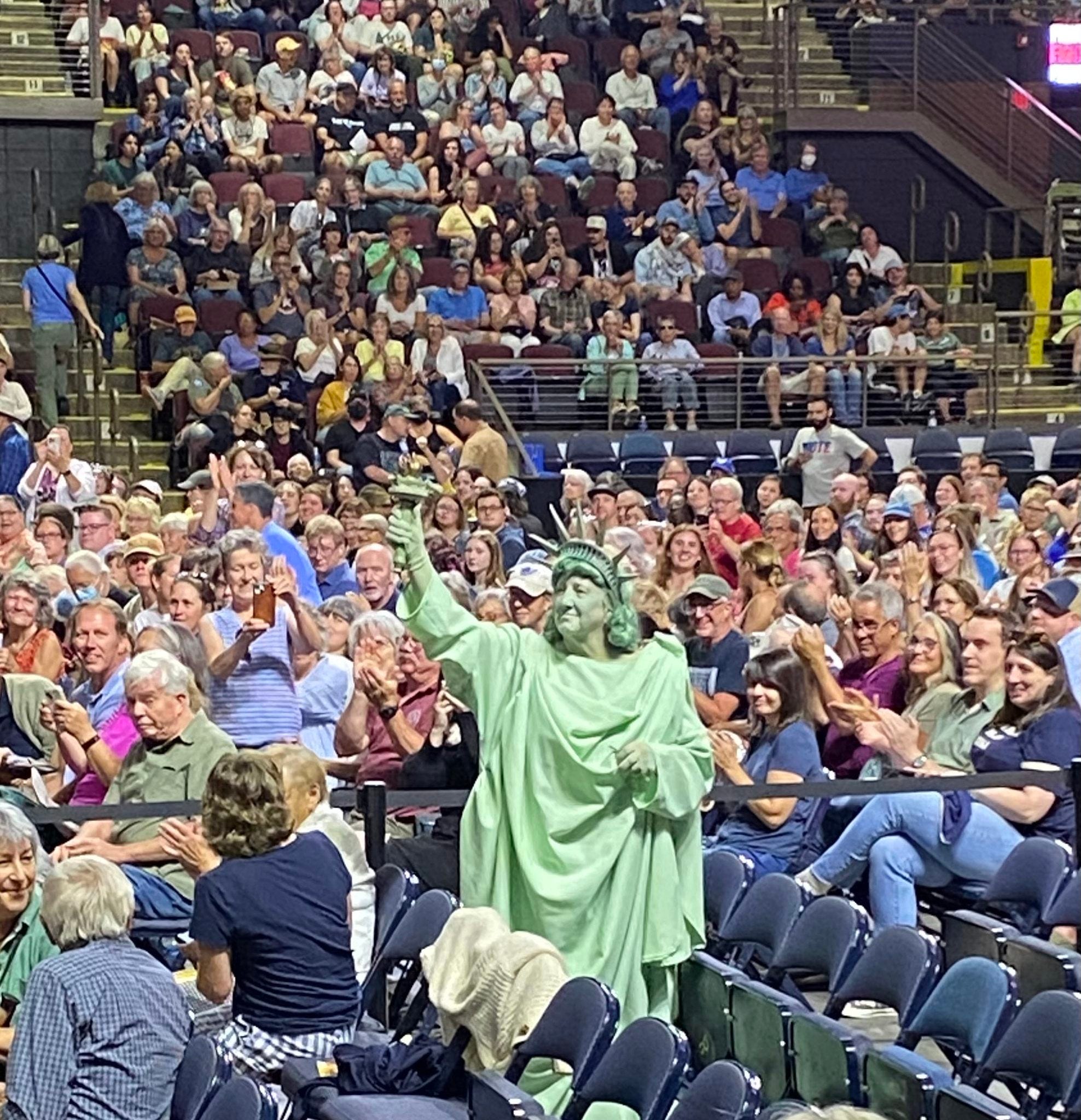
But history also shows that rallies alone don’t change systems—organization does. The energy I felt walking out of that arena was real, but energy dissipates without structure. The question isn’t whether that crowd recognized oligarchy—they clearly did. The question is whether that recognition becomes the foundation for sustained organizing.
The path from that arena to actual transformation runs through workplaces, union halls, tenant meetings, mutual aid networks—all the unglamorous places where people build power together. It runs through teachers organizing for dignity, retail workers demanding living wages, students refusing debt peonage, tenants fighting displacement.
What I experienced that night was a glimpse of what’s possible when working people see themselves clearly—not as individuals competing for scraps but as a collective force capable of transformation. The oligarchy Bernie named depends on our isolation, our belief that individual solutions can solve systemic problems. But when 6,000 people stand up and cheer for the truth about power, that isolation starts to crack.
The anxiety economy I wrote about last week thrives on our separation from each other, our inability to see patterns in our individual struggles. But solidarity—the kind I felt in that arena—is anxiety’s antidote. Not because it makes the problems go away, but because it makes clear that we have the power to solve them.
We built the wheel. It’s time we took it back.
References
Jon-Queally. (2025, September 3). Sanders, Jackson, Platner take aim at oligarchy with Maine Labor Day Rally. Common Dreams. https://www.commondreams.org/news/sanders-jackson-platner-take-aim-at-oligarchy-with-maine-labor-day-rally
Means and Meaning publishes every Tuesday. If you found value in this analysis, I’d be very grateful if you’d consider buying me a coffee — your support helps me dedicate time to this work while keeping all content free and accessible.
You can also support this project by subscribing (it’s free!), sharing with others who might appreciate it, or joining the conversation in the comments. Sometimes the best antidote to anxiety is knowing you’re not alone in seeing what’s happening.
Next week, we’ll examine how cryptocurrency grifts reveal the predatory logic of late capitalism - and why the president hawking digital coins might be the perfect symbol of our oligarchy.
Until then, keep questioning, keep connecting, and keep believing that another world is possible.
~ Chris