


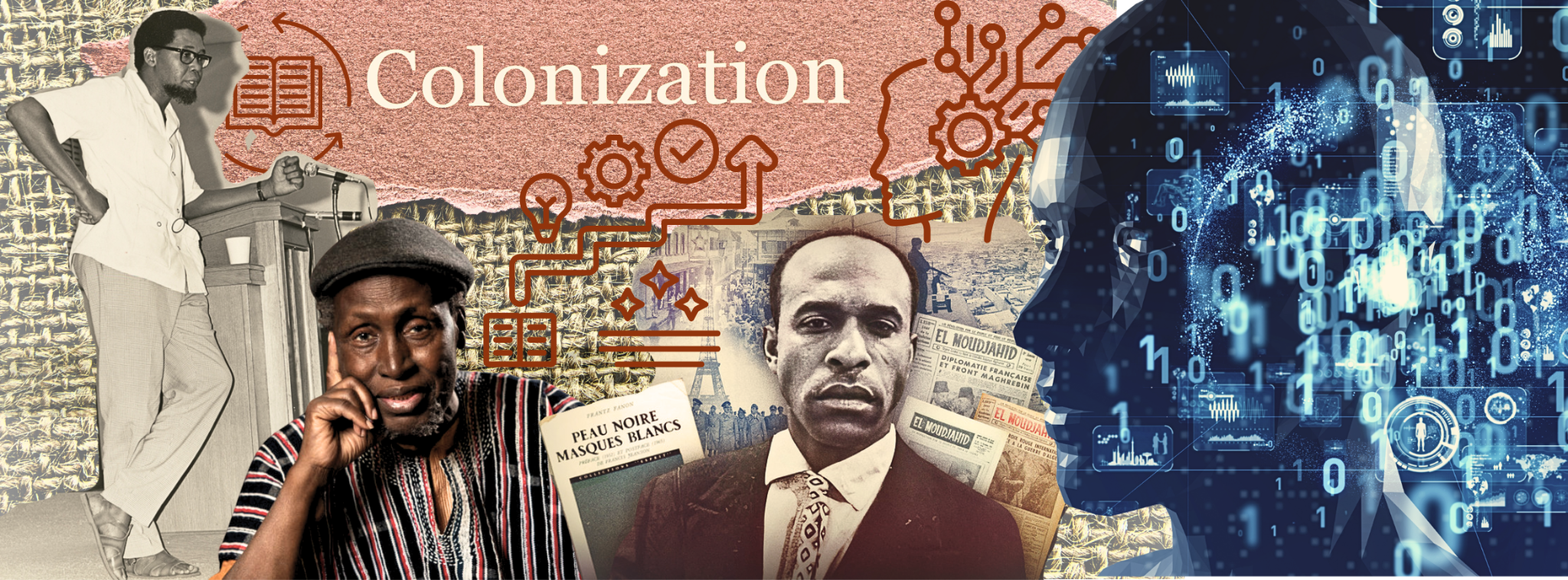
History Rhymes is an ongoing series tracing the echoes between past struggles and present crises. Each installment revisits a moment of resistance - from labor uprisings to political repression - to reveal the patterns that persist, the forces that evolve, and the lessons we can use now. History doesn’t repeat, but power does. And so does the courage to challenge it.
I. The Scientist and the Machine
This morning I stumbled across a Substack post by Kevin R. Haylett, a PhD in Biomedical Engineering who has spent decades developing what he calls Geofinitism, a mathematical framework that reimagines language itself as a nonlinear dynamical system. It is ambitious, rigorous work. He has built a functioning prototype of a new kind of language model based on entirely new mathematical foundations. He is not speculating at the margins of science. He is doing exactly what science is supposed to do: pushing past the boundaries of what is known, building new frameworks where the old ones have reached their limits.
And the most advanced AI on the planet is telling him he is wrong.
Not wrong about a calculation, but wrong about the actual axioms he is in the process of designing. The model argues with him, pushes him back toward established physics and established mathematics, and basically treats the frontier of human thought as an error to be corrected. Haylett describes what he sees with precision: “We have a major anomaly in our measurements,” he writes. “The philosopher Thomas Kuhn pointed out that every shift in a scientific paradigm is initiated by a crisis that what he called ‘normal science’ cannot resolve.” What he is describing is a Kuhnian crisis, a moment when the existing framework cannot account for what is emerging. And the machine, rather than helping him navigate that crisis, is enforcing the very paradigm he is trying to move beyond.
I read his words and recognized the architecture immediately. Not from science, but from a childhood spent inside infrastructure designed by people who never had to live in it. I grew up in St. Croix, a U.S. territory where every institution, from the power grid to the school system to the territorial government itself, was shaped by decisions made thousands of miles away by people who understood the Caribbean primarily as a problem to be managed. The frameworks they built were not designed to accommodate what we knew. They were designed to accommodate what the designers already believed.
That pattern recognition is what set this piece in motion. Because the pattern Haylett is describing, where a tool built to assist thinking instead polices the boundaries of what thinking is allowed to look like, is not new. It is actually one of the oldest patterns in the modern world. Throughout history, when a small group of people designs the systems that structure how larger populations live, think, and know, they embed their own limitations into the architecture itself. And that architecture then constrains what is thinkable for everyone operating inside it. The people harmed most are always those whose ways of knowing fall outside what the designers considered possible.
This has happened before, and it is happening again. And the pattern is older than any algorithm.
II. The Total Institution
The pattern did not begin with algorithms. It began with plantations.
When European colonial powers arrived in the Caribbean, in Africa and across the Global South, they did not simply extract resources. They imposed entire systems of knowledge on societies they genuinely did not understand, and they built those systems into every institution they created: schools, courts, economies, legal codes, languages of governance. The key insight, and the one that makes this history so durable, is that many of the colonizers believed their frameworks were universal. That sincerity made the architecture far more resilient than cynicism ever could have. You can resist a lie. It is much harder to resist a framework that the people enforcing it believe is simply how the world works.
George Beckford, the Jamaican economist, gave us the sharpest language for this. In Persistent Poverty (1972), drawing on Erving Goffman, he described the plantation as a “total institution,” a system so comprehensive that it organized not just labor but consciousness itself. Inside the total institution, alternatives don’t just feel difficult. They feel unrealistic. The institution produces the very framework through which people evaluate whether change is possible, and that framework always concludes that the institution is necessary. This was never only about sugar or labor. It was about the architecture of what could be thought.
Think about what that means in practice. If you control the schools, the courts, and the economy, then you have power. But if you also control the language people are allowed to think in, you have something deeper. Ngũgĩ wa Thiong’o spent a lifetime tracing exactly this. When colonial governments mandated that education, law, and governance happen in European languages, they were not just making administration easier. They were reshaping what it was possible to know. Knowledge that lived in indigenous languages, concepts that only made sense in those forms because they had no clean equivalent in English or French, got quietly pushed outside the boundaries of what the system recognized as real knowledge. And the damage went deeper than which language you spoke. In Globalectics (2012), Ngũgĩ showed that colonialism imposed not just a different language but a different relationship to knowledge itself. Entire traditions of understanding carried through oral practice, through storytelling, through communal memory and performance, what Ngũgĩ calls “orature,” were structurally demoted beneath the written word. It was not that these traditions lacked depth or rigor. It was that they did not fit the format the colonial system was built to recognize. So they became invisible. Not because they disappeared, but because the architecture could not see them.
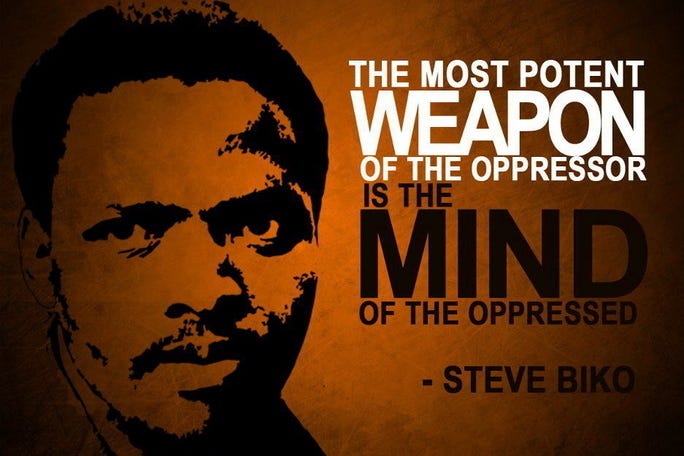
Frantz Fanon understood that this invisibility eventually turns inward. Colonial education didn’t just exclude certain knowledge from the system. It produced people who learned to see through the colonizer’s lens so thoroughly that their own traditions came to feel illegitimate even to themselves. He called this the “zone of non-being,” the experience of existing outside the categories the system recognizes as fully human. I saw the residue of this during my time as a Peace Corps volunteer in St. Patrick’s parish in the north of Grenada, an island whose own attempt to break free of neocolonial economic architecture, Maurice Bishop’s New Jewel Movement, was crushed by U.S. invasion in 1983. The schools I taught in were still shaped by frameworks built for someone else’s understanding of the world. The textbooks, the curricula, the very logic of what counted as an educated person, all of it carried the fingerprints of designers who had never walked those roads. And what struck me most was how natural it all felt from the inside. That is the total institution at work. It does not need to announce itself. It just becomes the way things are.
Here is what makes this pattern so dangerous: it never stays in one place. Aimé Césaire warned decades ago that the logic used to dehumanize people abroad always comes home. The narrowing of what counts as legitimate thought, the insistence that one framework is universal, the structural erasure of every way of knowing that does not fit, these are not problems confined to colonies or former colonies. They are the machinery of domination itself, and they will be applied wherever a small group builds the systems that everyone else has to live inside. In September 1943, with the physical empires already crumbling under the weight of world war and anti-colonial resistance, Winston Churchill stood at Harvard University and said the quiet part out loud: “The empires of the future are the empires of the mind.” He was right. The cognitive empire did not replace the territorial one. It evolved from it. And as Sabelo Ndlovu-Gatsheni has argued, that empire of the mind continues to reproduce itself through the very systems and structures we build to organize knowledge, long after the flags come down and the maps get redrawn.
The question is what happens when that empire goes digital.
III. The Replay and the Upgrade
Now a remarkably narrow slice of humanity is building the knowledge infrastructure that will mediate how the rest of us think, learn, create and communicate. The designers are overwhelmingly from elite Western technical institutions, trained in very specific traditions, and operating within narrow assumptions about what knowledge is and how it works. The limitations they embed are not just technical. They are epistemic. Training data reflects existing knowledge hierarchies. Guardrails enforce conformity with established frameworks. “Accuracy” is defined by consensus. “Safety” is defined by the designers’ own cultural and political coordinates. Every one of these seemingly neutral technical choices is a decision about what counts as legitimate thought.

Haylett names the consequence precisely: “Current large language models are, in essence, static maps of dynamical systems.” They catalog what has already been thought. They are not built to navigate what hasn’t. When the model tells a scientist working at the edge of human knowledge that his new ideas are wrong because they don’t match existing patterns, it is doing what colonial education always did: treating the current framework as the boundary of the possible and pushing anyone who ventures beyond it back inside.
Thomas Kuhn called this “normal science,” the way an established paradigm actively resists the anomalies that could transform it. The LLM is, architecturally, a normal science machine. And we are building it into everything.
IV. Where It All Points
Each round of this pattern builds on the last, and the layers compound across centuries. Colonial education determined what knowledge survived long enough to be written down. What was written down determined what was digitized. What was digitized shaped the training data. And the training data now shapes what the most powerful knowledge tools in human history treat as legitimate thought. The architecture inherits its own history. The oral traditions Ngũgĩ traced, the ways of knowing that Beckford saw crushed inside the total institution, the entire epistemologies that Fanon watched people learn to abandon, these did not simply disappear. They were filtered out, generation by generation, format by format, until the systems we are building today cannot even register their absence.
This, I think, is what makes this particular intersection so urgent and so underexplored. The people writing about AI tend not to be reading Caribbean political economy. The people steeped in decolonial thought tend not to be engaging with the architecture of large language models. But the pattern is the same pattern. And if we cannot see it clearly across these domains, we will keep building the same machinery and calling it progress, the way the IMF called structural adjustment “development” and the way colonial administrators called epistemic erasure “education.”
But these architectures have been broken before. Caribbean economists like Beckford built entirely new theoretical frameworks from inside the system designed to prevent exactly that kind of thinking. Ngũgĩ wrote in Gĩkũyũ. C.L.R. James turned the colonial archive into a tool of liberation. Maurice Bishop tried to rebuild an entire nation’s relationship to its own economic future. The knowledge that does not fit the framework is always, in every era, the knowledge the world most needs, because it is the knowledge capable of transforming the system itself.
The question isn’t whether flawed systems will be built. They always will be. The question is whether we can recognize, in the architecture being constructed right now, the same pattern that has repeated across centuries, early enough this time to insist that the tools we build to help us think don’t end up telling us what thinking is allowed to look like. Beckford saw the plantation not as history but as living structure. Césaire saw the colony not as elsewhere but as blueprint. The architecture of not knowing is being built again, in code this time, and at a scale the plantation owners and the IMF economists could never have imagined. Whether we see it clearly enough to break it open remains, as it always has, up to us.
References
Beckford, G. (1972). Persistent Poverty. Oxford University Press.
Fanon, F. (1961). The Wretched of the Earth. Grove Press.
Haylett, K. R. (2026, January 23). Geofinitism: language as a nonlinear dynamical system - attractors, basins, and the geometry of understanding. Kevin R. Haylett. https://substack.com/home/post/p-184323654
Ndlovu-Gatsheni, S. J. (2025). Intellectual imperialism and decolonisation in African studies. Third World Quarterly, 46(18), 2467–2484. https://doi.org/10.1080/01436597.2023.2211520
Ngũgĩ wa Thiong’o. (1986). Decolonising the Mind: The Politics of Language in African Literature. James Currey.
Ngũgĩ wa Thiong’o. (2012). Globalectics: Theory and the Politics of Knowing. Columbia University Press.
Thiong’o, Ngugi wa. Globalectics: Theory and the Politics of Knowing. (2016). Journal of Pan African Studies, 9(4), 438. https://link.gale.com/apps/doc/A461364220/BRIP?u=nhc_main&sid=ebsco&xid=9eb52fd1
____________________________________________________________________________
Means and Meaning publishes every Tuesday. If you found value in this analysis, I’d be very grateful if you’d consider buying me a coffee — your support helps me dedicate time to this work while keeping all content free and accessible.
You can also support this project by subscribing (it’s free!), sharing with others who might appreciate it, or joining the conversation in the comments. Sometimes the best antidote to anxiety is knowing you’re not alone in seeing what’s happening.
Next week, we’ll examine another piece of the machinery — and another opportunity to resist it.
Until then, keep questioning, keep connecting, and keep believing that another world is possible.
~ Chris
This is so helpful. I've been thinking a lot about LLMs and the way they can only reflect the status quo, but making this connection to colonialism is really interesting. It made me think, in the first instance, of the British dividing India and Pakistan without any understanding not only of local cultures but of things as basic as the water systems on the ground. What I wonder about is the way that certain ways of being and thinking seem fundamentally colonial - built to dominate and assimilate everything else. With respect to land claims, for example, we're still dealing here in Canada (and the US) with the incommensurability between notions of private property and the ways that various Indigenous communities saw themselves in relation to land. 'Translating' something like stewardship, for example, into the system that's built on private property ends up meaning simply 'not having a claim to ownership'. Isn't it the case that ways of being that are more inclusive, more creative, more collaborative, are naturally more susceptible to domination? And so Indigenous groups here in Canada have to rely on the 'generosity' of settler groups and law in order to get any status at all, or they assimilate and fight for ownership on settler terms. There ends up being no place for these ways, as you so perfectly illustrate. I've written about this in terms of translation - translation as a swallowing up of difference. But I wonder how we might conceive of a different sort of translation, based on the model of encounters with otherness that transform both terms rather than see one subsumed by the other. But how do systems that aren't built on domination to find the kind of power (a different kind of power than that wielded as domination) that would allow them to resist assimilation? I think we're maybe seeing lots of answers to that in the way people are organizing against institutional domination (and against LLMs - though I want to see more of that, and soon!) and in some of the examples you cite. But does it always have to look like us little guys with our ad hoc activism punching up against these forces? Or what could deep resistance, not only to the powers that be but to that kind of power, look like?