


This essay is part of the Theory for the Streets series that brings big ideas about power, work, and everyday life down to earth. Each piece takes concepts that usually live in classrooms or think tanks and translates them into something you can feel — how systems shape our choices, how power hides in plain sight, and how understanding it all can help us push back.
I. “Affordability” Is Everywhere — Anxiety Is Rising
Everyone is talking about affordability. Groceries, rent, gas, child care, insurance, etc. The numbers keep climbing, and the message we’re given is simple: things just cost more now. Tighten your belt. Budget better. Make different choices. But that explanation doesn’t quite match how it feels.
Plenty of people are working full-time, sometimes more than full-time, and still watching their bank accounts hover near zero. Paydays come and go with barely a ripple. A raise arrives and vanishes into higher rent or a bigger grocery bill. You’re not splurging. You’re surviving.
What’s striking isn’t just how expensive life has become. It’s how fragile it feels. According to recent surveys, a growing share of Americans expect their financial situation to be worse a year from now. Not because they’re reckless. Because they can see the math.
Most conversations about affordability fixate on prices, as if the problem is purely external. Inflation. Supply chains. Greedy corporations. All of that matters. But it leaves out the other half of the equation: what people are paid.
Affordability isn’t only about what things cost. It’s about what your labor is worth in a system built to keep that value low.
II. The Mistake Everyone Keeps Making
When politicians talk about affordability, they almost always point in the same direction. Prices are too high. Rents are out of control. Groceries cost more than they used to. Something, somewhere, needs to be brought down.
But that framing quietly skips over the other half of the equation. Affordability is not just about what things cost. It’s about what you earn. And for most working people, wages have been deliberately held down for decades.
This isn’t an accident. It’s a design choice. Since the late 1970s, workers have gotten better at their jobs. Technology improved. Productivity rose. We produce far more in an hour of work than our parents or grandparents ever did. But paychecks didn’t rise alongside that output. The gains went elsewhere. Upward. Out of reach.
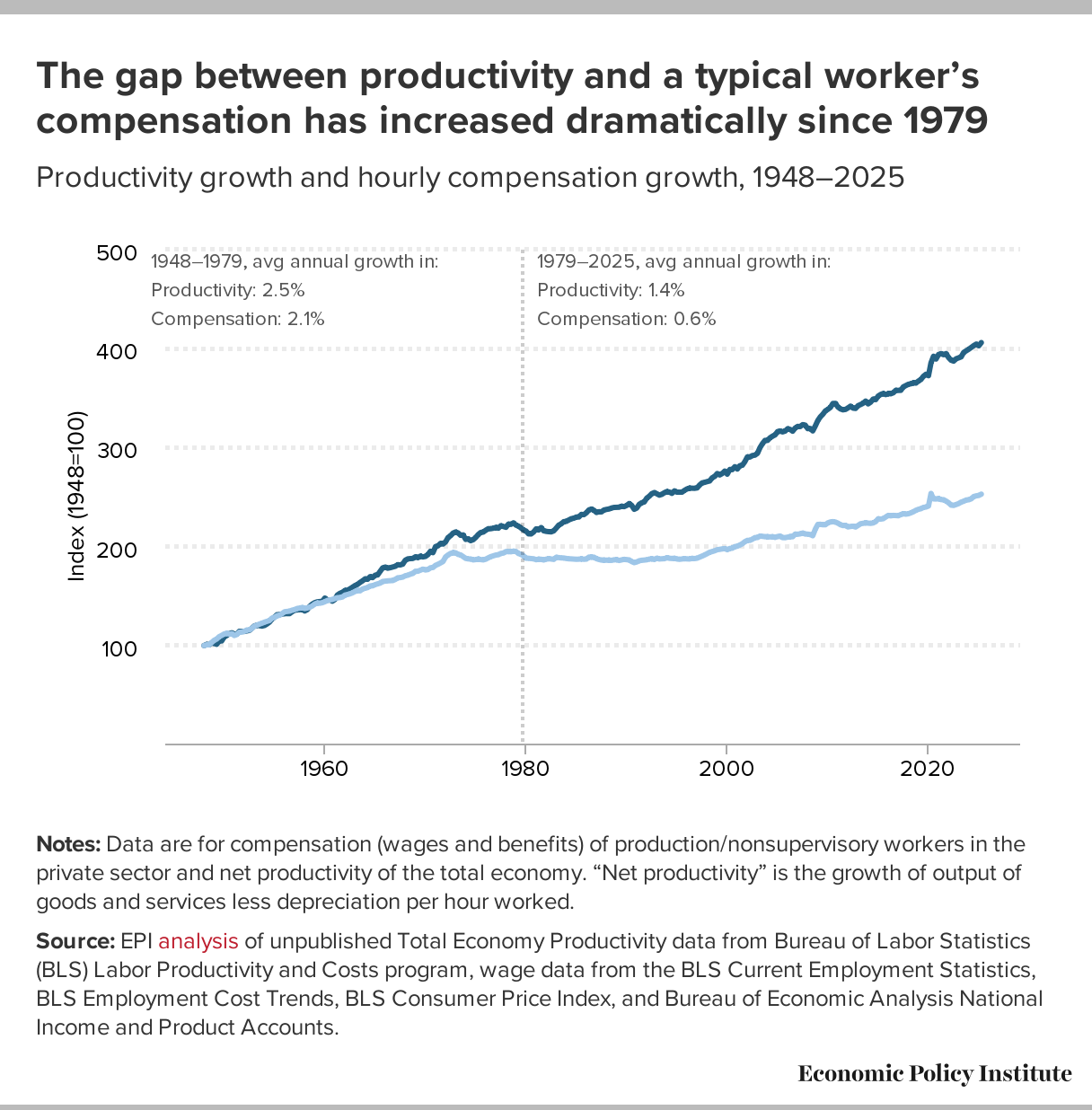
In plain terms, workers are creating more value than ever, and receiving a smaller share of it back.
Mainstream debates treat wages as if they’re personal. Your raise reflects your effort. Your paycheck reflects your worth. If you’re struggling, the implication is that you need to negotiate better, reskill faster and, increasingly, hustle harder.
Prices, meanwhile, are treated as political. Inflation is debated on cable news. Corporate price-gouging becomes a scandal. Supply chains are analyzed. Interest rates are adjusted.
This split is backwards. Wages are not a natural force. They are shaped by policy, power, and bargaining strength. They rise when workers have leverage and fall when that leverage is crushed. As economist Heidi Shierholz puts it, “True affordability comes when working people earn enough to cover the costs of living with dignity and security.” That dignity doesn’t come from cheaper crumbs. It comes from a bigger slice of what workers already produce.
III. How the Wage Squeeze Actually Works
Let’s strip this down to its moving parts.
Most people are told affordability is about prices rising too fast. Rent goes up. Groceries spike. Health care eats another chunk of the paycheck. That story is familiar, but it is also incomplete.
What’s been quietly happening underneath is just as important: wages have been held down on purpose. For decades, productivity kept rising while paychecks stalled. Workers produced more value every hour, but that value didn’t flow back to them. It flowed upward, to executives, shareholders and balance sheets that look healthy precisely because households don’t.
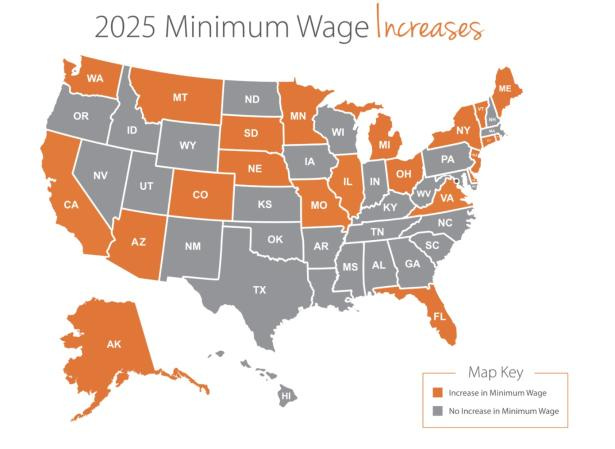
This is why minimum wage increases matter, even when they’re modest. When states raise the floor, they’re not creating luxury. They’re pushing back, slightly, against a system designed to extract more work for less pay. The fact that so many states have had to step in tells you how badly the federal floor has failed.
Meanwhile, surveys show the result on the ground. Nearly half of Americans can’t cover three months of expenses. A growing share expect to be worse off next year, not better. That isn’t pessimism. It’s pattern recognition.
When wages lag and costs climb, people don’t just feel squeezed. They become permanently precarious: one illness, one layoff or one rent hike away from total collapse.
IV. The Language That Keeps Us Stuck
Notice how carefully this crisis is named. We’re told there’s an affordability problem. Or a cost-of-living squeeze. Or a season of economic uncertainty. Each phrase sounds technical. Temporary. Almost weather-like. Prices went up. Conditions changed. No one, apparently, decided anything.
But this language does important work. By focusing attention on prices, it quietly erases wages. It treats your paycheck as a fixed fact of nature rather than the result of power, policy, and struggle. You’re encouraged to ask why groceries cost more, but not why your labor hasn’t been paid more for decades.
Marx had a sharper theory for this: surplus value. He argued that under capitalism, the value workers create is systematically taken from them, then disguised. That theft doesn’t look like a mugging. It looks like a paycheck that never quite keeps up. A raise that lags behind rent. A promotion that adds responsibility but not security.
Modern euphemisms like ghost growth or labor shortages play the same role. They soften what is, at bottom, a transfer of wealth upward. Workers produce more. Owners keep more. The gap gets renamed.
When language hides the mechanism, it also hides the solution. If affordability sounds like a pricing glitch, we wait for it to fix itself. If it’s really about wages, bargaining power and who controls the surplus, then it becomes something people can organize around now, and work to change.
V. What Affordability Really Demands
What all of this points to is something many people already feel in their bones: this crisis isn’t accidental, and it isn’t temporary. It’s structural. When wages are held down while productivity rises, when costs climb faster than paychecks, when whole regions need food banks and side hustles just to get by, that isn’t a glitch in the system. It is the system doing what it was built to do.
Affordability debates often treat workers as passive consumers waiting for prices to fall. But workers are producers first. Nothing in the economy exists without our labor. When wages are suppressed, dignity is suppressed with them. And when people are forced to live paycheck to paycheck, always anxious about the next rent increase or medical bill, that anxiety becomes a form of control.
The good news is that this story has never been one-sided. Every gain working people have ever made came from collective pressure, not from waiting patiently for the market to behave. Wage floors, unions, social protections, shorter working hours - none of these were gifts. They were fought for.
The affordability crisis isn’t asking us to tighten our belts. It’s asking us to ask better questions. Not just ‘Why is everything so expensive?’ but ‘Who decides what our work is worth, and why?’
References
Cohn, E. (2025, August 18). 2025 Worker-Led State policy victories show how states can—and Must—Do more to hold the line against escalating federal attacks on workers’ rights | Portside. Portside. https://portside.org/2025-08-18/2025-worker-led-state-policy-victories-show-how-states-can-and-must-do-more-hold-line
Lawrence, M., & Bivens, J. (2021, May 13). Identifying the policy levers generating wage suppression and wage inequality. Economic Policy Institute. https://www.epi.org/unequalpower/publications/wage-suppression-inequality/
Parker, K., & Lin, L. (2025, May 7). Growing share of U.S. adults say their personal finances will be worse a year from now. Pew Research Center. https://www.pewresearch.org/short-reads/2025/05/07/growing-share-of-us-adults-say-their-personal-finances-will-be-worse-a-year-from-now/
Shierholz, H. (2025, November 29). Everyone is talking about affordability — and making the same mistake. MS Now. https://www.google.com/url?q=https://www.ms.now/opinion/inflation-affordability-prices-wages-jobs&sa=D&source=docs&ust=1766762173922801&usg=AOvVaw2pm-Jc3ZuQ2shj2n57Bmj8
____________________________________________________________________________
Means and Meaning publishes every Tuesday. If you found value in this analysis, I’d be very grateful if you’d consider buying me a coffee — your support helps me dedicate time to this work while keeping all content free and accessible.
You can also support this project by subscribing (it’s free!), sharing with others who might appreciate it, or joining the conversation in the comments. Sometimes the best antidote to anxiety is knowing you’re not alone in seeing what’s happening.
Next week, we’ll examine another piece of the machinery — and another opportunity to resist it.
Until then, keep questioning, keep connecting, and keep believing that another world is possible.
~ Chris