


Signal/Noise is an ongoing series that cuts through the spectacle to find the structure underneath. Each installment takes a breaking moment (either political, cultural or economic) and traces the power dynamics most coverage misses. The signal is always there. You just have to know what to listen for.
I. The Balcony
I have a photo from 2013 which shows my AS-Level Economics class at The English Modern School in Doha. Five Qataris, one Sri Lankan, one Iranian. Behind us, a Hampshire College pennant on the wall and “The Labour Market” on the projector. I posted it to Facebook on March 2nd with the following caption: “Out of all 150 students I teach these ones are by far the brightest and most engaged.”
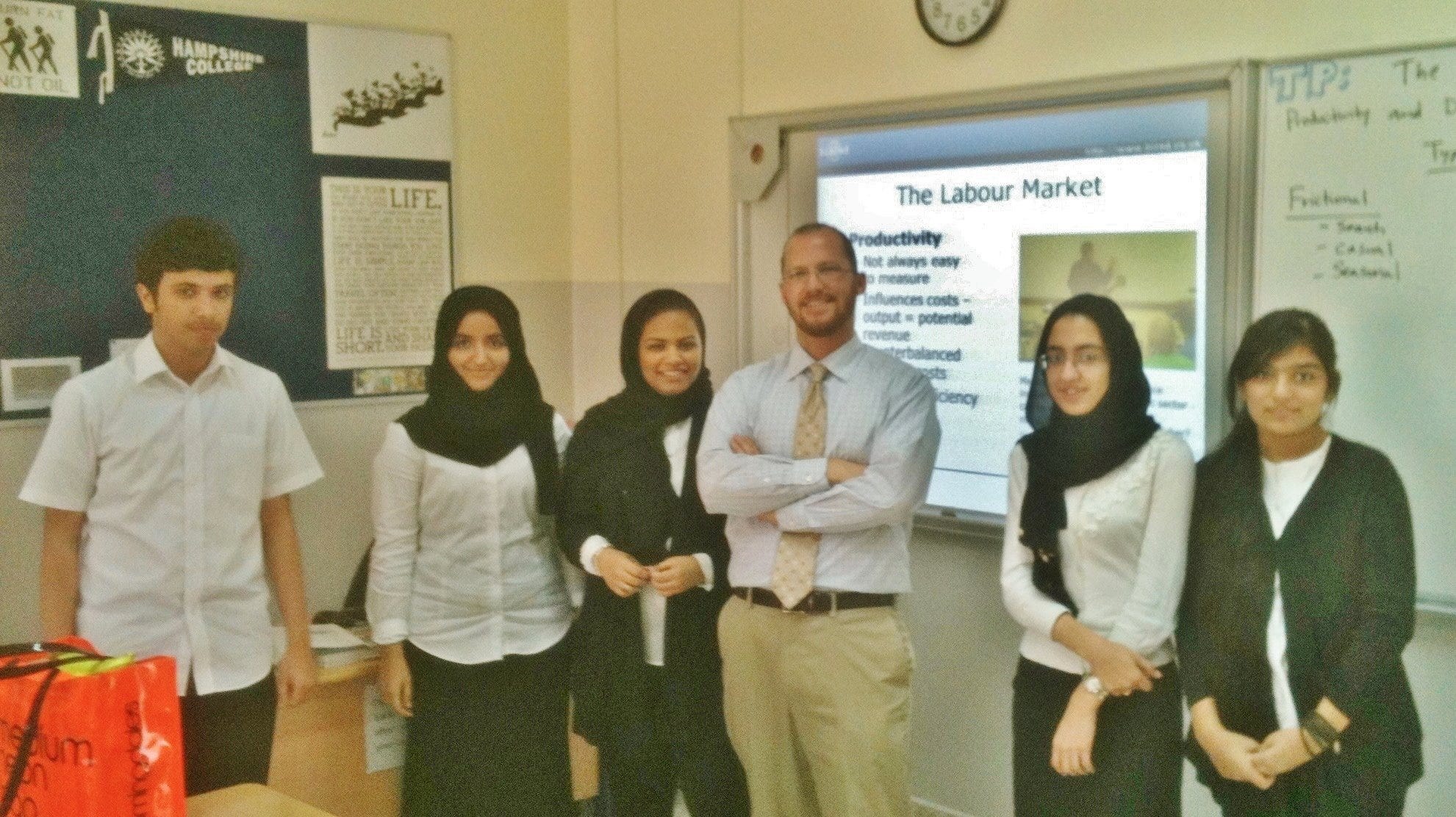
The school sits directly across the street from the US embassy compound in Doha.
One of my Iranian students, one of the girls, asked to be excused from class one afternoon because it had started to lightly rain outside. This almost never happens in Qatar. She wanted to go to the balcony to pray, she said, because “prayers count double when it rains.” Of course I let her.
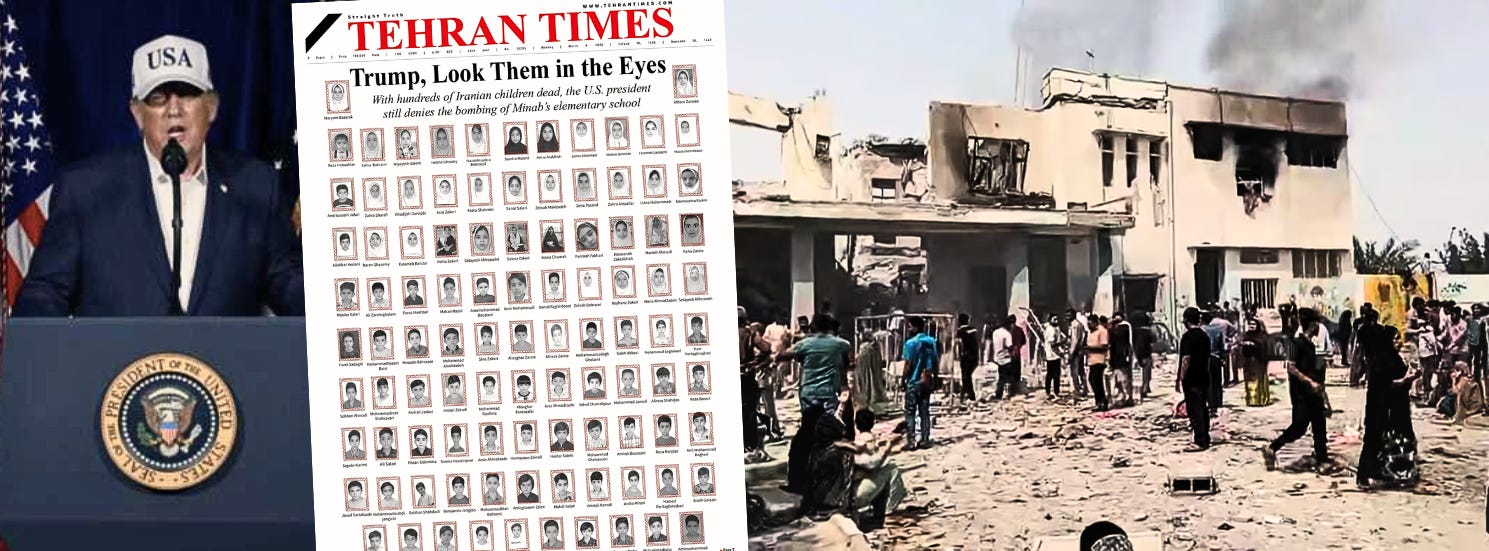
On February 28, 2026, the United States and Israel launched joint airstrikes across Iran. They killed Supreme Leader Ali Khamenei, dozens of senior officials and hundreds of civilians. According to the Iranian Red Crescent Society, over the past week they’ve also hit 65 schools. At the Minab girls’ elementary school, 180 children died on the very first day. Those were someone’s students. Someone knew their names, knew which ones raised their hands too much and which ones never raised them enough.
Iran retaliated. Missiles hit US bases across the Gulf, struck targets in Bahrain, Kuwait, the UAE and Qatar. The US embassy compound in Doha has been targeted. My former school is across the street.
I still have friends there. Former colleagues in Doha, Dubai and Cairo. They’re checking State Department advisories and wondering whether to abandon the lives they built or hope the next strike misses. They’re largely on their own either way.
This is the third American war of aggression in my conscious lifetime. I marched in D.C. against the looming invasion of Afghanistan. I later marched in New York against the impending war in Iraq. And I served in the Peace Corps in Grenada, where the US did another regime change in 1983. I taught the Iranian Revolution to high schoolers in St. Croix. I know this history in my bones, in my lesson plans and in the faces of children I can still name.
The president watched the strikes from a resort in Palm Beach.
II. The Architecture of Regime Change
In 1953, the US and Britain overthrew Mohammad Mossadegh for nationalizing Iranian oil. In his place, they installed the Shah. Twenty-six years of brutal autocracy later, the 1979 revolution produced the Islamic Republic, the exact government the US just bombed.
Read that sequence again. The United States just launched a war against a regime its own previous intervention created.
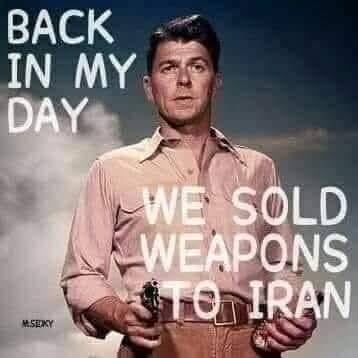
I taught this history. At my school in St. Croix, I designed a World Revolutions course with a full unit on the Iranian Revolution. Students used Brown University’s Choices Program, reading primary sources and ultimately engaging in a mock debate representing the various factions and deciding which direction the revolution should take. The cycle of intervention and blowback wasn’t an abstraction in my classroom. It was the lesson.
And the script just never seems to change. Iraq 2003: fabricated intelligence about weapons of mass destruction that didn’t exist, an “imminent threat” that wasn’t. Grenada 1983: the same language of liberation, the same refusal to let a sovereign nation choose its own path. I marched against Iraq. I lived in Grenada. I’ve watched the same playbook run three times now with different targets and identical logic.
This time the fabrication is even lazier. Trump’s envoy Steve Witkoff claimed Iran was “probably a week away from industrial-grade bombmaking material.” This contradicted open-source intelligence, the IAEA, and the administration’s own claim last summer that they’d already “obliterated” Iran’s nuclear sites. The navy couldn’t even attack sooner because it was still parked off Venezuela from the last regime change.
And let’s not forget the negotiations. Talks had concluded in Geneva two days before the strikes. Oman’s foreign minister confirmed a breakthrough was within reach. Iran had reportedly offered to suspend enrichment. Peace was in hand. They dropped it to pick up a bomb. They always do.
III. The Cornered Emperor
A president with cratering approval ratings and his name appearing tens of thousands of times in the Epstein files launches the largest military operation since Iraq. From Mar-a-Lago in a white USA baseball hat.
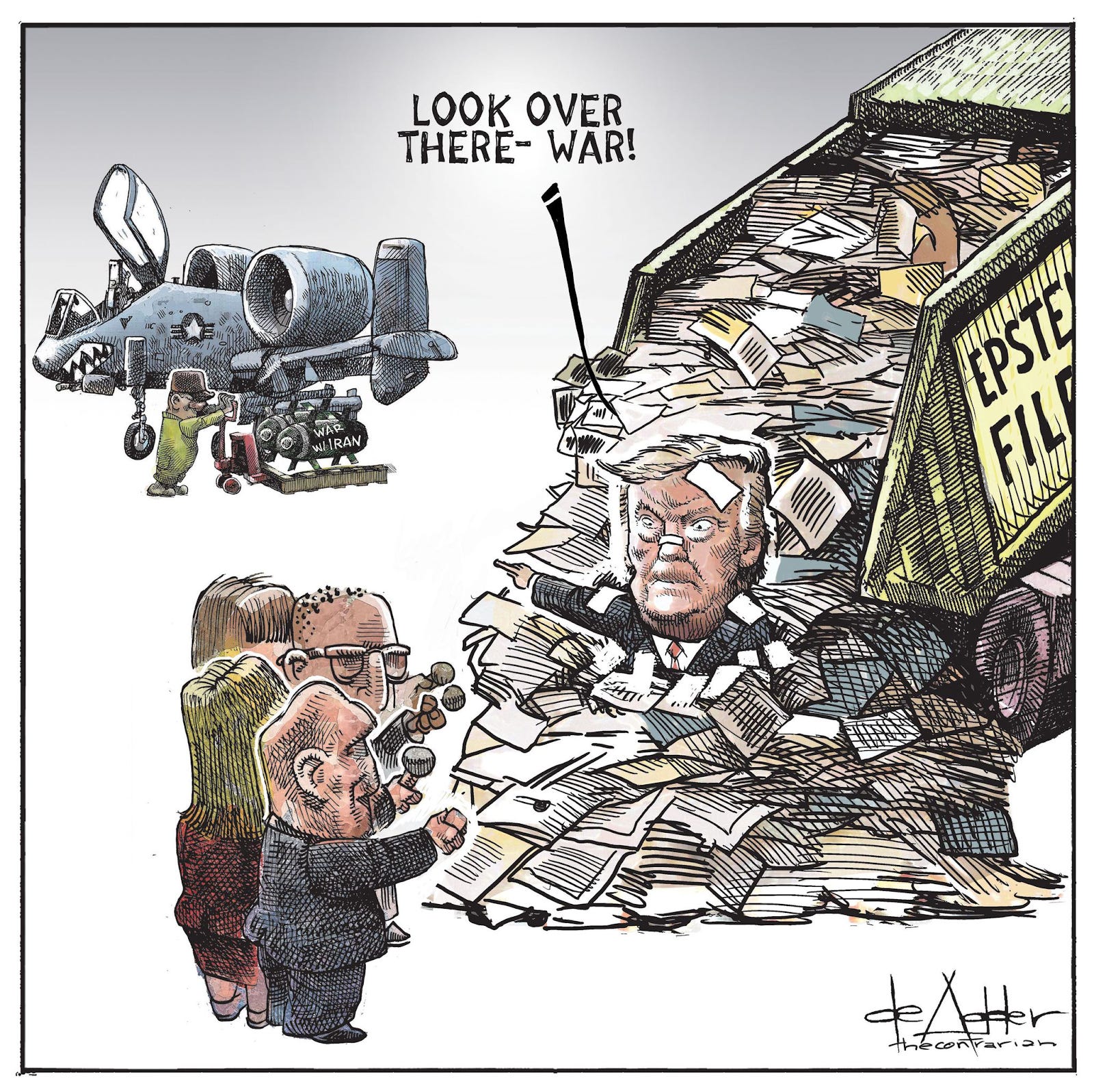
His envoy, a real estate lawyer, claims Iran is a week from a nuclear weapon. His own intelligence agencies say a decade. He accidentally kills his own handpicked regime-change candidates in the bombing and then shrugs it off. He tells the Iranian people to “take over your government” once the bombing stops, which is to say: he has no real plan for what comes after.
And then, at a press conference in Doral just hours ago, he told us how the decision was actually made. Not from intelligence briefings. Not from Pentagon threat assessments. Not from consultation with military leadership or authorization from Congress. “The situation was very quickly approaching the point of no return,” he said, “based on what Steve, and Jared and Pete were telling me.” Steve Witkoff, Jared Kushner, and Pete Hegseth. A real estate lawyer, his son-in-law, and a former Fox News host. That is the war cabinet that sent America into its largest military operation in over twenty years.
When pressed about the elementary school his missiles destroyed in Minab, the president said: “I just don’t know enough about it.” The man who ordered this war doesn’t know enough about the 180 children it killed on the first day.
I read Jean Baudrillard’s The Gulf War Did Not Take Place in a critical theory seminar at Hampshire College. It rewired how I understood modern warfare: not as event but as spectacle, perception managed and media-packaged until the distance between war as represented and war as lived becomes infinite. Charles Hugh Smith made a similar argument last week: the primary task of warmakers is perception management, shaping the fog of war into narratives “as carefully curated as an advert campaign.” Trump slurring through a press conference in Doral while 168 families in Minab bury their children is Baudrillard made flesh. War as content. War as programming.
But this is bigger than one man’s pathology. This is the architecture of imperial decline. Rome overextended its legions and taxed its citizens to pay for them until neither held. Britain after Suez in 1956, the moment the world saw the empire couldn’t back its own ambitions. The Soviets in Afghanistan. The Americans in Vietnam, where Smith reminds us military leaders had no understanding of what they’d started, substituting surveillance photos for actual knowledge of the enemy.
And here we are barely three months into 2026, burning through a billion dollars a day. No legal basis. No clear objective. No exit strategy. The domestic foundation rotting underneath. I certainly don’t have a crystal ball, but the history teacher in me wonders if this may ultimately prove to be America’s Suez moment: the point where the gap between imperial ambition and imperial capacity becomes undeniable to everyone except the emperor himself.
IV. Who Pays
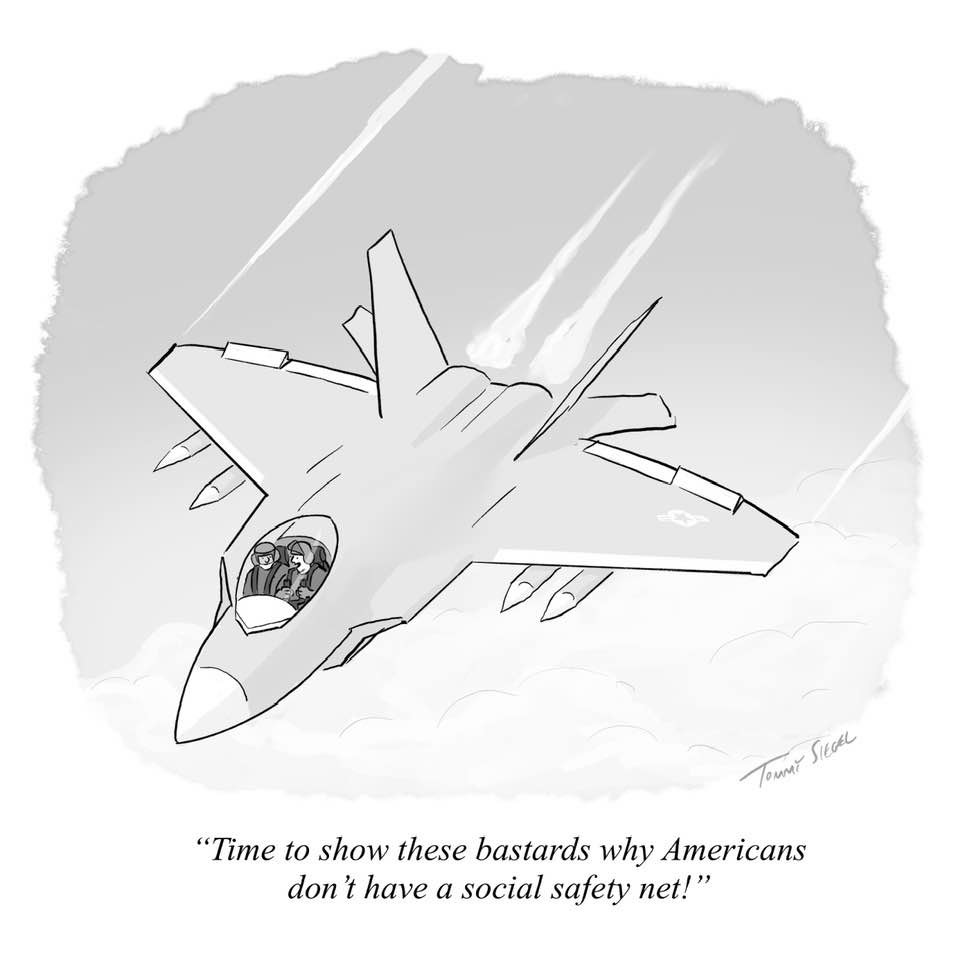
There’s a cartoon making the rounds on social media: a fighter jet soaring overhead, caption reading, “Time to show these bastards why Americans don’t have a social safety net!” It’s funny until you do the math.
Every Tomahawk missile costs considerably more than a public school teacher’s annual salary, and roughly 200 of them were fired on the first day alone, totaling $340 million in cruise missiles. Four B-2 bombers flew nonstop from Missouri at $30 million for those sorties, fighter jet operations ran another $271 million, and the total cost of day one came to $779 million. The war is now burning through roughly a billion dollars a day, and Iran is bleeding the budget dry by launching $20,000 drones, while the US fires $4 million Patriot interceptors to shoot them down (and usually two per drone, which is standard protocol). Bloomberg reports Qatar’s Patriot reserves could last four days at the current rate of use. That money could rebuild every crumbling school in this country, fund universal childcare, wipe out student lunch debt, resurface roads, and replace the lead pipes that cities have begged for funding to fix for decades. It could keep the 22 million families who just lost food stamps from choosing between meals and medication. Instead it buys the world’s most expensive fireworks show while children on two continents go without.
And who dies for it? Seven American service members so far. Six from the 103rd Sustainment Command, an Army Reserve unit out of Iowa. Reserve. These are people with civilian lives who got called up to staff a makeshift operations center at a civilian port in Kuwait. Sgt. Benjamin Pennington, 26, from Glendale, Kentucky. He was stationed in Saudi Arabia, a country that didn’t want this war in the first place.
Trump attended the dignified transfer at Dover, where he told ABC that the families said, “Please sir, win this for my boy.” Then flippantly added, about future casualties: “It’s a part of war.” As if the war were weather. As if he hadn’t ordered it eleven days ago.
Oil is at $114 a barrel. The Strait of Hormuz is effectively closed, with hundreds of tankers stalled, and 20% of the world’s daily oil supply choked off. Qatar’s energy minister has also warned that continued conflict could “bring down economies of the world.” Gas prices are climbing quickly. Working families in Ocala and Louisville and Cedar Rapids will pay for this war every time they fill up the tank. They always do.
V. Where It All Points
The pattern compounds: 1953 produced 1979, which in turn eventually produced 2026, and each intervention created the conditions that justified the next one. The “Epstein regime” (as the Iranian government is now calling the Trump administration in social media posts) killed the Supreme Leader and his son was installed within days, with the Revolutionary Guards declaring “we are the ones who will determine the end of the war” while crowds rallied in Isfahan as bombs fell nearby. The Iranian regime didn’t collapse. It consolidated. It always does. The architecture of regime change doesn’t produce freedom. It produces the next regime.
Meanwhile, only 29% of Americans support this war. Trump still cannot define what victory exactly looks like. The Strait of Hormuz is effectively closed. Oil is surging, and gas prices are climbing toward levels that will punish every working family in this country even before the normal summer surge. The civilizational stress test we’ve been tracking on Means and Meaning all year just converged in a single catastrophic event: a president waging an illegal war without congressional authorization, an economy buckling under the weight of its own military spending, and an energy crisis manufactured by the very people who promised to fix it. Last week I wrote about the #vanlife movement and teachers pricing used box trucks because this country won’t pay them enough for housing. This week the same country found a billion dollars a day to bomb elementary schools on the other side of the world.
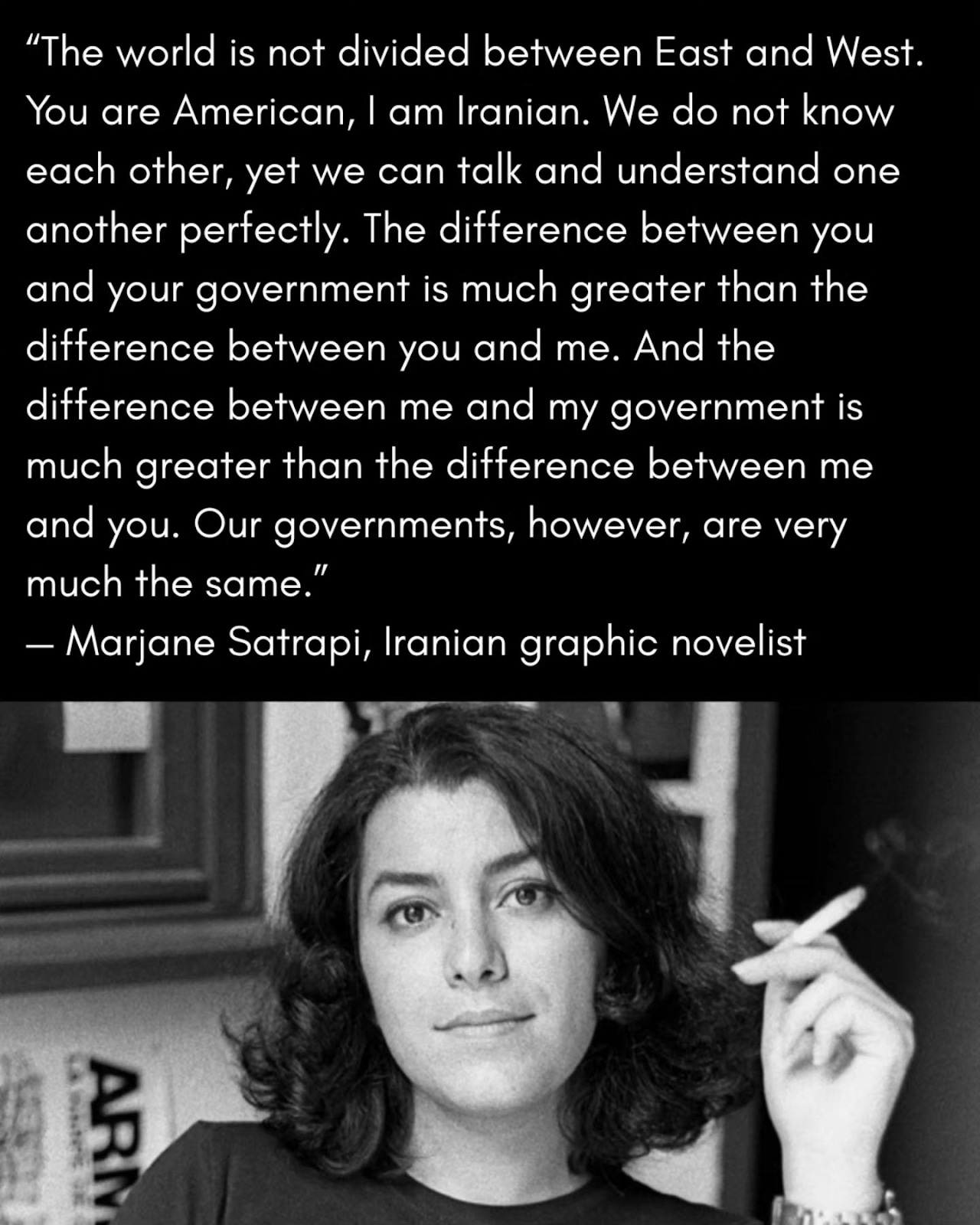
Marjane Satrapi once said that the distance between ordinary Americans and ordinary Iranians is far smaller than the distance between either group and their own governments. She is right. The schoolchildren in Minab and the reservists from Iowa have more in common with each other than either group has with the men who sent the missiles and the men who launched the drones in response.
I keep thinking about my former student on that balcony outside my classroom in Doha, palms open in the rain, praying softly in Farsi, and the quiet certainty in her voice when she told me why. Prayers count double when it rains. I don’t know where she is now. I don’t know if she’s safe. But I know that what she believed in that moment, that there are things sacred enough to stop everything for, is the opposite of everything this war represents.
It’s raining. Prayers count double. We’re going to need them.
References
Delaney Reese, H. (2026, March 10). Trump told us Who’s really in charge. https://substack.com/@heatherdelaneyreese/p-190477997
Fowler, J. (2026, March 2). Four to five weeks. The Humanity Archive.

Hafezi, P., & Bose, N. (2026, March 9). Trump threatens to escalate Iran war, but says it could end soon. Reuters. https://www.reuters.com/world/middle-east/khameneis-hardline-son-mojtaba-appointed-irans-new-leader-pope-leo-warns-middle-2026-03-09/
Hudspeth Blackburn, P., & D’Antonio, I. (2026, March 9). Seventh US service member killed in Iran war is identified as Army sergeant. CNN. https://edition.cnn.com/2026/03/08/politics/us-service-member-killed-iran-war
Kamyana, I. (2026, March 1). Iran war: A new phase of imperialist onslaught. International Socialist League. https://lis-isl.org/en/2026/03/iran-war-a-new-phase-of-imperialist-onslaught/?fbclid=IwY2xjawQTQmVleHRuA2FlbQIxMQBzcnRjBmFwcF9pZBAyMjIwMzkxNzg4MjAwODkyAAEe3frqLRWH-s8AwYeHq6c0H-b7IR1axLVp7MG3-jtqH_Y4fpmCtHcTym6JFvc_aem_EzRUaz1jyMD0JtaI_K0K8g
Operation Epic Fury? More like Operation Epic FUCKUP! (2026, March 3). Facebook. https://www.facebook.com/IFLOZ/posts/pfbid0UdBkjVWJyK6MhNYAA8GVgD1p41RHraL9n5seu4qGi9UTcMjcCAxJHWVbJmpfo2Ftl?rdid=D1ZQ316DdDWNVwxU#
Parker, B. (2026b, February 28). Three massive questions concerning Trump’s war in Iran. The Bulwark.

Smith, C. H. (2026, March 1). The war. Charles Hugh Smith’s Substack.

US offensive on Iran burned through an estimated $779M on first day. (2026, March 2). Middle East Monitor. https://www.middleeastmonitor.com/20260302-us-offensive-on-iran-burned-through-an-estimated-779m-on-first-day/?fbclid=IwY2xjawQT59xleHRuA2FlbQIxMABicmlkETFmOG9mS2xTZmF6cFl5V0g4c3J0YwZhcHBfaWQQMjIyMDM5MTc4ODIwMDg5MgABHp2QiVXF2TFmIwueTktLPkXcayt-C-T7pyO44J4_VNDhHKgEls77Ls3jGuyJ_aem_i9Bei5V7RO4Axi5KyjRPwA
____________________________________________________________________________
Means and Meaning publishes every Tuesday. If you found value in this analysis, I’d be very grateful if you’d consider buying me a coffee — your support helps me dedicate time to this work while keeping all content free and accessible.
You can also support this project by subscribing (it’s free!), sharing with others who might appreciate it, or joining the conversation in the comments. Sometimes the best antidote to anxiety is knowing you’re not alone in seeing what’s happening.
Next week, we’ll examine another piece of the machinery — and another opportunity to resist it.
Until then, keep questioning, keep connecting, and keep believing that another world is possible.
~ Chris