


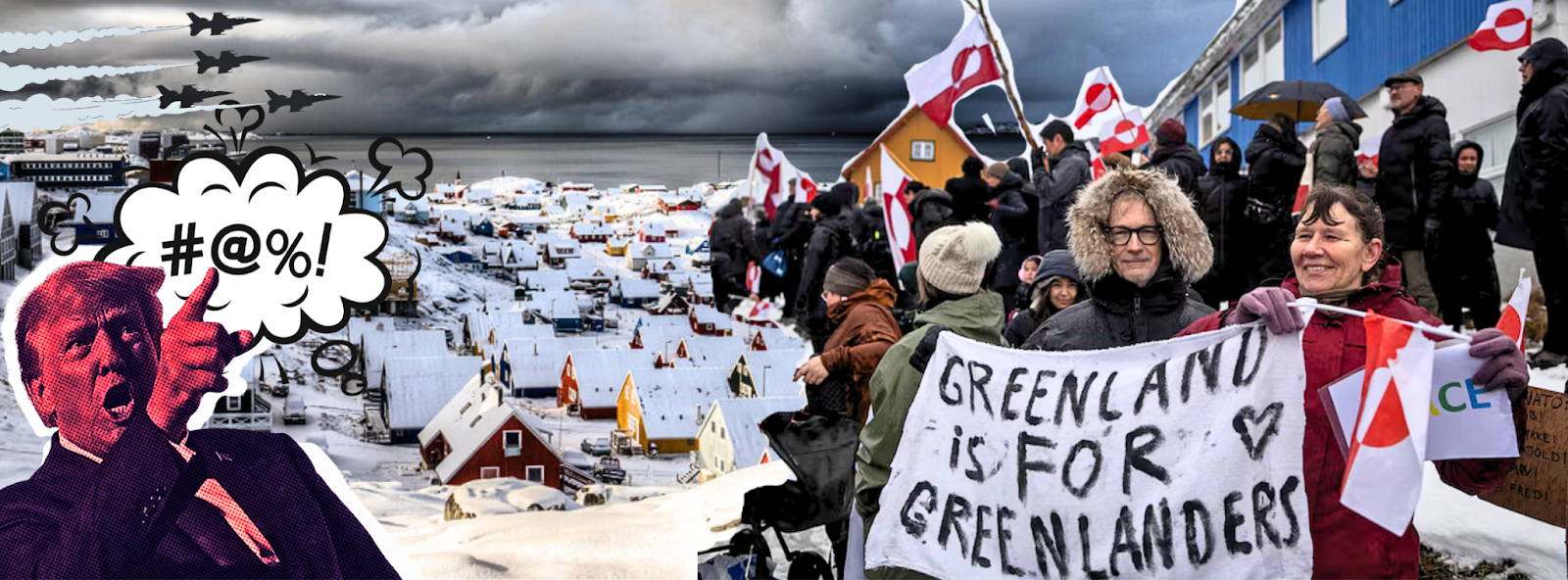
This piece is part of “Signal/Noise,” rapid responses to breaking events — cutting through media static to find the patterns and power structures beneath the headlines.
Section I — Empire, Seen From the Water’s Edge
I learned what American “belonging” means in St. Croix. A former Danish colony. Bought, not freed. Governed, not represented. You grow up pledging allegiance to a flag that never pledges back. You learn early that being “part of America” means being permanently provisional.
Greenland sits in that same shadow now. Trump questions, as Anne Applebaum notes, why Denmark has any “right of ownership” at all, as if centuries of history, treaties the United States itself has signed, and the lives of 57,000 Greenlanders are just paperwork blocking desire. As if sovereignty were a clerical error waiting to be corrected.
I’ve seen this logic before. In the Virgin Islands. In Puerto Rico. In Guam, and in every place that exists more as a strategic asset than as a community.
Jesse Damiani calls a potential seizure of Greenland a scenario so extreme that it could shatter what remains of the postwar order. He’s right. But from the margins, this doesn’t really feel new. It actually feels like repetition. Empire always looks stable, until you’re standing at its edges, watching it decide whether you’re worth keeping whole.
Section II — Why the Arctic Is Being Claimed Now
This isn’t really about Trump’s personality. It’s actually about what happens when capitalism runs out of easy frontiers. Historically, the pattern is clear: the Americas became plantations, Africa became mines, the Middle East became oil fields, and the Caribbean became sugar factories and military logistics hubs. Each transformation followed the same script: resources discovered, populations displaced, profit extracted and, eventually, ruins left behind.
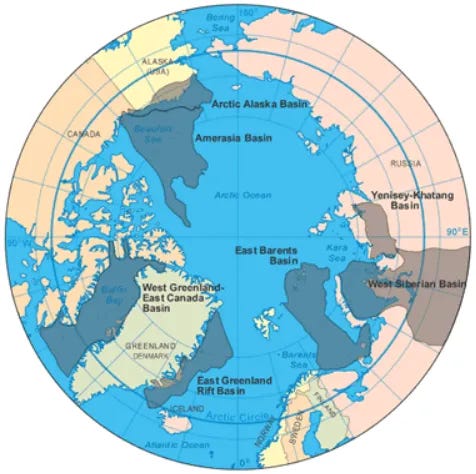
Now the Arctic is becoming a scramble for energy, minerals and shipping lanes. According to the U.S. Geological Survey, 13% of the world’s undiscovered oil and 30% of its undiscovered natural gas sit beneath Arctic ice. As The Economist put it, the region is becoming “a strategic crossroads,” linking oceans, continents and supply chains.
Marx called this primitive accumulation: the violent conversion of land, labor and life itself into profit. Frantz Fanon, the Martinican psychiatrist who chronicled colonialism’s psychological and material violence, called it colonial extraction dressed as development. And Walter Rodney, the Guyanese historian assassinated for his revolutionary organizing, showed that “underdevelopment” isn’t inherited - it’s produced, deliberately and systematically, to serve capital’s needs elsewhere.
Seen from this angle, Greenland isn’t now just being “noticed.” It’s being priced. As ice melts and trade routes open, capital follows. Militaries in turn follow capital, and flags follow both. So what looks like geopolitics is really political economy in uniform. The question isn’t whether resources will be seized, only by whom, and at whose expense.
Section III — From Rules to Raw Power
For most of our lives, empire wore a mask. Grace Blakeley, an economist writing about the unraveling of neoliberal order, calls it “the façade that once legitimized empire” - the pretense that there were rules, norms and procedures. That powerful states basically had to pretend. That invasions required excuses. That domination needed paperwork.
It was never honest, sure. But it mattered. As Blakeley writes, “You obey the law because ‘it’s the law.’” Legitimacy restrains violence, imperfectly and unevenly, but sometimes enough to matter.
Jesse Damiani makes the same point from another angle. The postwar order, he argues, privileged “predictability over predation.” Bretton Woods and NATO weren’t moral systems. They were stabilizers and shock absorbers - basically ways of keeping the great powers from tearing the world apart every generation.
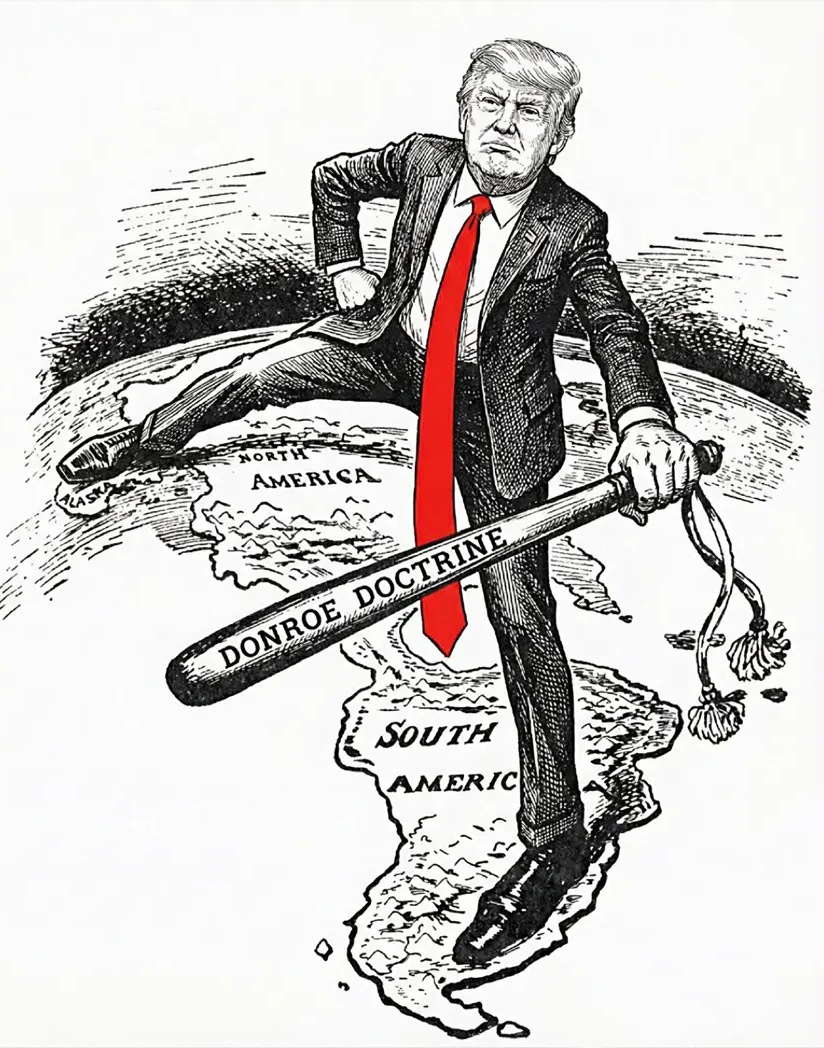
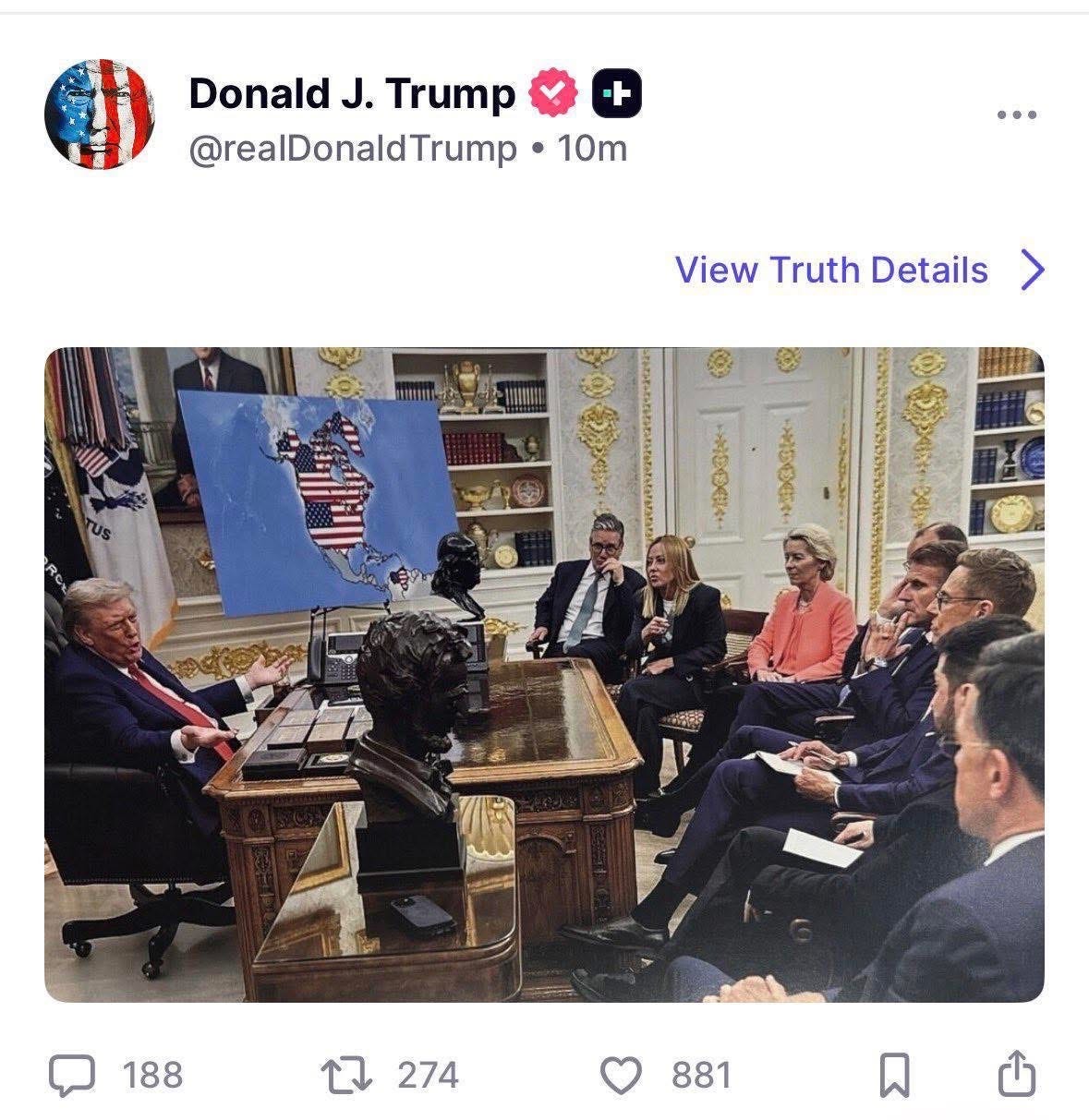
Trump is now fully tearing off the mask. No WMDs. No humanitarian alibis. Just: “Complete and Total Control of Greenland” (as he recently wrote in what is arguably the most insane memo ever issued by a chief executive). He’s basically arguing that might makes right, out loud. And once that becomes normal, everything destabilizes.
Damiani warns that Europe holds roughly 45% of foreign investment in the U.S. When trust collapses, capital flees. Borrowing costs rise, prices climb, and living standards fall. Imperial recklessness abroad becomes economic violence at home. The boomerang always comes back.
Section IV — What “Belonging” Looks Like in an Empire
I learned what “belonging” means in an empire long before Greenland made headlines. I learned it in St. Croix.
You see, the U.S. Virgin Islands were purchased from Denmark in 1917 - the same Denmark that now “owns” Greenland. It was described as a “peaceful transfer.” A “strategic acquisition.” Another flag raised. Another map recolored. But more than a century later, residents there still can’t vote for president (and neither can the other approximately five million inhabitants of dependent overseas American territories). They still lack full congressional representation. Federal agencies rule with little accountability. When hurricanes hit, aid often arrives late, if it arrives. When budgets tighten, they’re expendable. This is what “ownership” looks like when you’re the asset, not the owner.
As Anne Applebaum warns, Trump now talks as if sovereignty is just “a boat that landed there hundreds of years ago.” Fred Kaplan calls this “a new level of madness.” But for colonial subjects, it isn’t madness. It’s the operating system. It’s how empire has always worked, stripped of the rhetoric about freedom and partnership. The language changes depending on the audience (Greenlanders hear “security,” islanders hear “extraction”), but the logic underneath remains constant: you may become American, but you will not become equal.
The Economist catalogs the Arctic’s “bountiful oil, gas, minerals and fish,” and that language always comes first. Resources get inventoried before people get consulted. Profits get projected before populations get considered. This is the lesson St. Croix has been teaching for a century, the lesson Greenland is being offered now: imperial belonging means living in a place someone else has already decided is worth more than you are.
Section V — The World This Creates
Jesse Damiani warned that a seizure of Greenland would be “a hinge event,” or basically the collapse of what remains of the postwar order. Anne Applebaum asked us to imagine Marines in Nuuk, forcing citizens of a treaty ally to submit at gunpoint. The Economist saw melting ice opening new routes, new mines and new frontiers. All of it pointed in the same direction: when stability breaks, capital doesn’t retreat. It militarizes. And when rules fail, power doesn’t hesitate. It consolidates. When empire loses its mask, it reaches for its gun.
That is what this is about. Not freedom. Not democracy. Not “security.” Thirteen percent of the world’s undiscovered oil. Thirty percent of its gas. Resources.
Remember the historical arc: plantations became ports. Ports became pipelines. Pipelines became military bases.
Africa: minerals.
Caribbean: sugar and logistics.
Middle East: oil.
Arctic: everything left.
And at the Kennedy Center, members of Congress recently cut into a Greenland-shaped cake (the plantation logic in pastry form), laughing as if sovereignty were dessert.
But then something unexpected happened.
At Davos last week, Trump backed down. No military force. No tariffs on European allies. The threats, for now, suspended. Various political observers and news outlets called it another example of “TACO” (Trump Always Chickens Out). But that misses the point. This wasn’t chickening out. This was empire hitting limits.
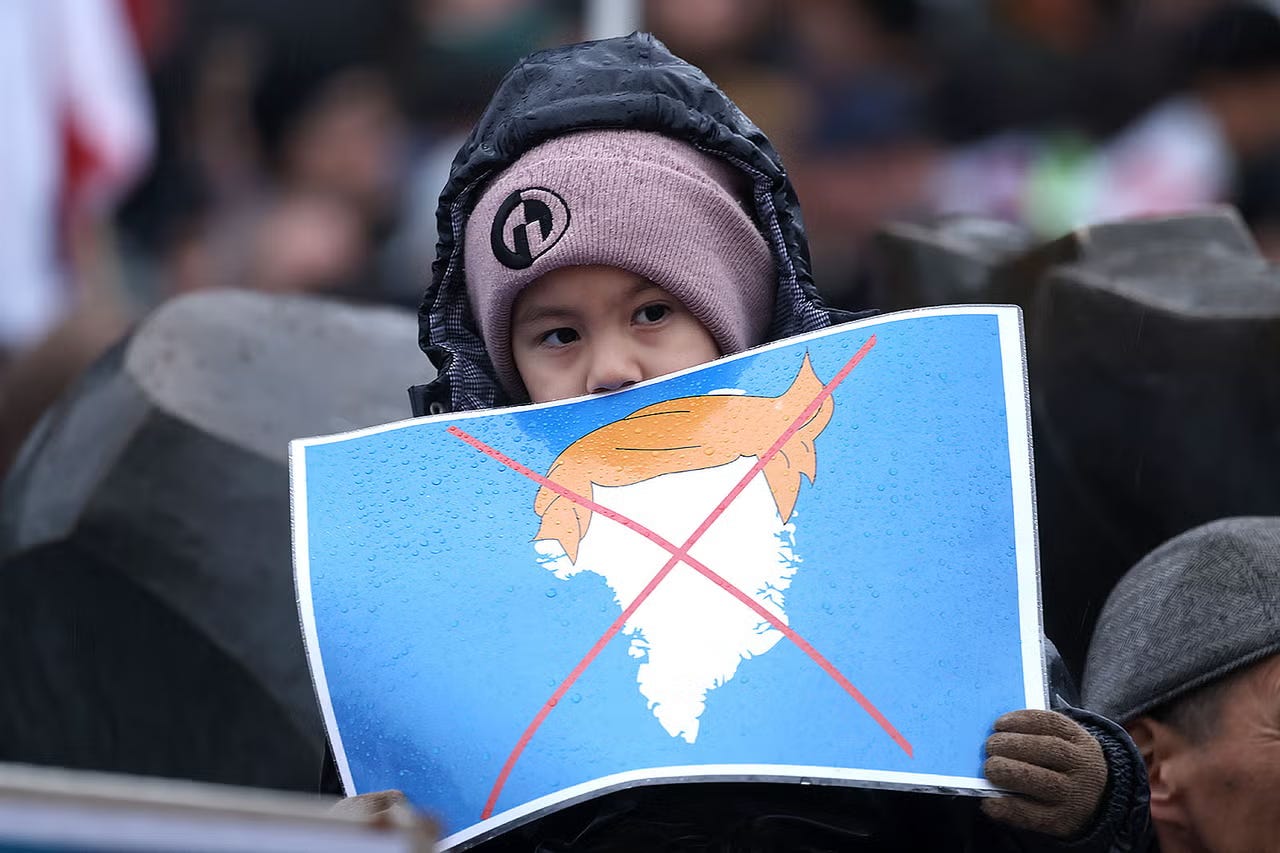
Europe pushed back, collectively and loudly. Denmark and Greenland refused. NATO allies coordinated resistance. Even Trump’s own advisors split, with figures like Vance and Rubio advocating negotiation over annexation, while Stephen Miller pushed to keep military force on the table. Republican lawmakers warned of impeachment. Markets shuddered. The costs became real.
So Trump retreated, wrapped in the language of “framework deals” and “strategic partnerships,” but retreating nonetheless. This matters, because resistance worked. The naked assertion of power met strong resistance and blinked.
For those of us who’ve watched empire operate for decades, this moment reveals something crucial: when legitimacy dies, certainty dies too. An empire that can no longer justify itself also can’t predict what it can get away with. Force without legitimacy is power without stability. Every threat becomes a test, and every retreat exposes limits.
But here’s what we can’t afford to forget: this isn’t over. Not by a long shot. Trump still wants Greenland’s minerals, its bases and its strategic position. The “framework deal” he touts is imperialism with better PR: negotiated extraction instead of military seizure, but extraction nonetheless. NATO Secretary General Mark Rutte confirmed that negotiations will continue between the US, Denmark and Greenland. The EU held an emergency summit to coordinate response, badly shaken by what one diplomat called America’s “bully” behavior. European leaders are rethinking the transatlantic relationship entirely (as they should).
The mask is still off. The threat is suspended, but not abandoned. And as the Economic Times notes, “EU governments remain wary of another change of mind from Trump.”
Fanon warned that colonialism creates “zones of non-being” or places where some lives are always negotiable. Césaire consequently warned that colonial violence always comes home. Well…it already has.
So here are the questions we face:
Can resistance hold? When the mask drops and empire speaks plainly, can collective refusal keep it at bay? And for those of us in the imperial core: Will we join that resistance, or will we wait until the weapons turn inward, until our own cities become the frontiers, until the logic tested in St. Croix and other islands (and now threatened in Greenland) arrives at our own doors?
Because that’s the lesson of this moment. Empire without legitimacy is empire without limits, except the limits we create through refusal. Trump backed down from Greenland because the costs became real. The question is whether we’ll make those costs real every time, before the threats become realities, before the next target is chosen, before the logic of disposability expands to swallow more lives, more places and, ultimately, more precious futures.
The world that empire creates is the world we allow it to create. Greenland reminds us that we still have some say in the matter.
For now.
References
Applebaum, A. (2026, January 20). Trump’s letter to Norway should be the last straw. The Atlantic. https://www.theatlantic.com/ideas/2026/01/trump-letter-to-norway/685676/
Blakeley, G. (2026, January 19). The Law of the Jungle. Grace Blakeley.
Damiani, J. (2026, January 18). Americans: You need to understand how catastrophic an invasion of Greenland would Be—For YOU. Reality Studies.

Farrow, F. (2026, January 20). Breaking down Trump’s argument for acquiring Greenland. ABC News.
Ferguson, M. (2026, January 21). Republicans cut into Greenland cake in shocking Kennedy Center Party. The New Republic. https://newrepublic.com/post/205498/republicans-greenland-cake-us-flag
Kaplan, F. (2026, January 20). It might have seemed as if Trump couldn’t get more irrational. Greenland proves he’s just getting started. Slate Magazine. https://slate.com/news-and-politics/2026/01/trump-greenland-obsession-impeach.html
LaGuardia, A. (2025, November 12). The Arctic will become more connected to the global economy. The Economist. https://www.economist.com/the-world-ahead/2025/11/12/the-arctic-will-become-more-connected-to-the-global-economy
Online, E. (2026, January 22). TACO strikes again: Why Trump pulled back from Greenland bluster. The Economic Times. https://economictimes.indiatimes.com/news/international/global-trends/taco-strikes-again-why-trump-pulled-back-from-greenland-bluster/articleshow/127166986.cms
____________________________________________________________________________
Means and Meaning publishes every Tuesday. If you found value in this analysis, I’d be very grateful if you’d consider buying me a coffee — your support helps me dedicate time to this work while keeping all content free and accessible.
You can also support this project by subscribing (it’s free!), sharing with others who might appreciate it, or joining the conversation in the comments. Sometimes the best antidote to anxiety is knowing you’re not alone in seeing what’s happening.
Next week, we’ll examine another piece of the machinery — and another opportunity to resist it.
Until then, keep questioning, keep connecting, and keep believing that another world is possible.
~ Chris
I agree with you 100% . I hope you can get this editorialized in the local USVI papers.